 Berlin · Europa Wire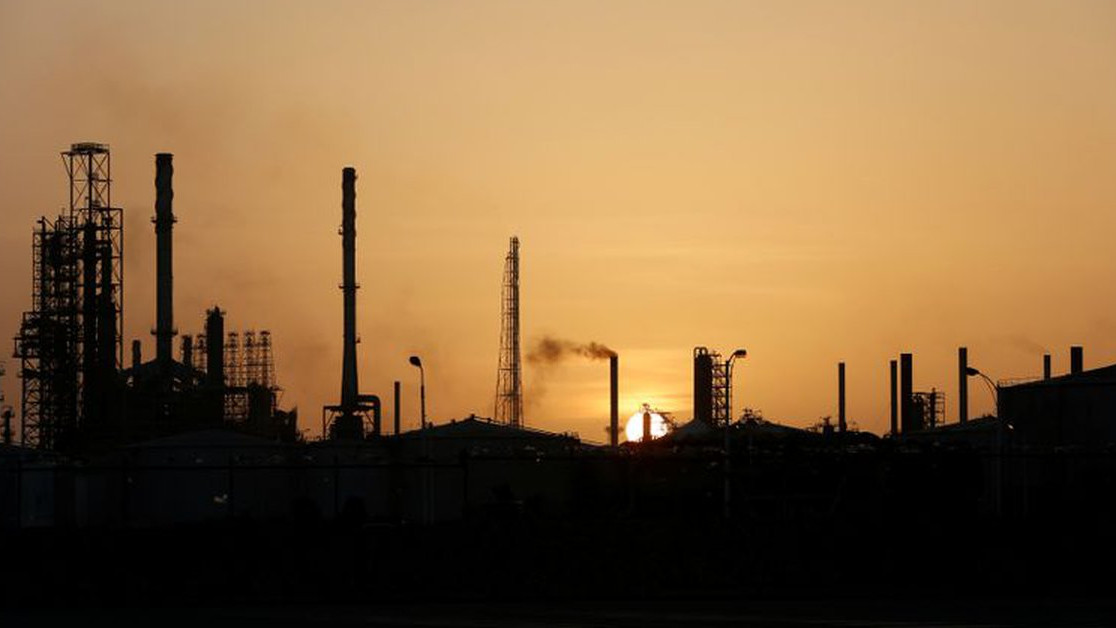
Home Energy Crude Oil Tsvetana Paraskova What I Cover Tsvetana Paraskova is an energy and commodities journalist who has contributed to Oilprice.com for nearly a decade, covering global energy markets, commodities,... More Info Set us as your preferred Google source Premium Content By Tsvetana Paraskova - Sep 27, 2026, 6:00 PM CDT The U.S.-led restructuring of Venezuela’s oil sector has triggered a wave of new deals. Venezuelan production could rise from around 1.25 million bpd today to 2.58 million bpd by 2035.
Reaching those levels will require massive investment and drilling growth, as decades of underinvestment have left infrastructure degraded and the country with only a handful of active rigs. The Trump Administration is touting the new oil order in Venezuela as a tremendous opportunity for reviving the industry in the world’s biggest crude oil resource holder. The U.S.-led restructuring of the sector kicked out Russian and Chinese companies out of previously awarded concessions, and spurred a flurry of oil deals with oil majors, the biggest oilfield service providers, and relatively unknown newcomers—all with the purpose of boosting Venezuela’s oil production and exporting a large part of it to the United States.
The deals include one with privately held oil company North American Blue Energy Partners (NABEP) announced by the White House last month as “the biggest oil deal in world history.” This deal could involve $100 billion in investment in new oil infrastructure after the new interim Venezuelan authorities granted NABEP 100-year concessions for 17 oil fields with proven reserves of approximately 65 billion barrels. NABEP, led by Venezuela-born businessman Alejandro Betancourt, says it is looking “to rapidly expand its operations in Lake Maracaibo and the Orinoco Belt with the near-term goal of increasing production to more than 1 million barrels of oil per day.” “NABEP’s $100 billion figure represents a long-term funding requirement, not committed near-term capital, and the company has not disclosed a detailed financing structure,” intelligence firm Rystad Energy said . “Rystad Energy favors investment programs tied to established operators and defined assets over larger ambitions requiring substantial external capital.” Venezuela’s current oil production is about 1.25 million barrels per day (bpd).
This is set to rise to around 1.6 million bpd by 2028 and 1.8 million bpd by 2030. Then, by 2035, Venezuela’s crude oil production is expected to jump to around 2.58 million bpd, as greenfield developments will add to the current brownfield-led output growth in the near term, according to Rystad Energy’s upside scenario. Venezuela certainly has the resource, but decades of mismanagement and infrastructure collapse at oil sites will need much more investment than the ones needed to reactivate rigs.
As of August, when the “biggest oil deal in history” was announced, Venezuela had just two active drilling rigs, per Baker Hughes data. To reach Rystad’s projections of 1.6 million bpd output by 2028 and 1.8 million bpd by 2030, activity would need to reach around 50 rigs by 2028 and nearly 80 by 2030. “A number of newly identified opportunities were previously associated with Russian and Chinese operators, and further restructuring of some legacy positions remains possible as the new contractual framework develops,” said Radhika Bansal, Senior Vice President, Oil and Gas, at Rystad Energy.
Legacy producers and service providers have accelerated deal-making in Venezuela in recent weeks, encouraged by the changed geopolitical orientation and President Trump’s stated goal to expel adversaries Russia and China out of the Western Hemisphere. Since “the biggest oil deal in world history” announcement in August, Chevron has pledged over $7 billion in investment over the next five years and more than doubled its production in Venezuela to about 600,000 bpd. Continental Resources this week announced a Memorandum of Understanding with state oil firm PDVSA to operate and develop the Ayacucho 2 Block in the prolific Orinoco Oil Belt.
Ayacucho 2, which Continental Resources will operate with a 100% interest, has an estimated 30 billion barrels of resource in place. Italy’s Eni this month signed a strategic contract in Venezuela to become the operator of the giant Junín-5 oil field in the Orinoco Belt. Junín-5, a heavy oil field containing 35 billion barrels of certified oil in place, currently produces around 12,000 bpd.
Oilfield services giants Halliburton and SLB have also signed deals to pursue oil and gas development opportunities and activate rigs in Venezuela. The first stage of Venezuela’s oil recovery would be restarting mothballed projects and increasing production from operational fields. Then billions of U.S. dollars will be needed to repair dilapidated infrastructure and build new processing sites and pipelines to have Venezuela’s heavy oil flow.
Greenfield development of newly awarded blocks will take years and even more billions of dollars. The pace of Venezuela’s oil production recovery “will remain conditional on actual capital deployment and Venezuela’s ability to rebuild drilling, services and infrastructure capacity,” Rystad Energy said. By Tsvetana Paraskova for Oilprice.com More Top Reads From Oilprice.com U.S. to Back Argentina’s First LNG Export Project With $6 Billion Loan Just One Commodity Vessel Left the Strait of Hormuz on Wednesday Europe’s Gas Prices Jump as Hormuz Standoff Drags On Download The Free Oilprice App Today Back to homepage Tsvetana Paraskova What I Cover Tsvetana Paraskova is an energy and commodities journalist who has contributed to Oilprice.com for nearly a decade, covering global energy markets, commodities,...
More Info Leave a comment EXXON Mobil -0.35 Open 57.81 Trading Vol. 6.96M Previous Vol. 241.7B BUY 57.15 Sell 57.00